

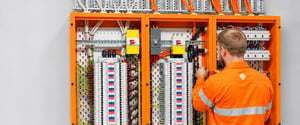
Platinum Electricians has delivered switchboard upgrades to sites ranging from City of Sydney council buildings to aged care facilities and retail portfolios. One pattern holds across all of them: the projects that run smoothly are the ones where the facility manager asked the right questions before procurement, not during construction.
Most of the content currently available on commercial switchboard upgrades focuses on when to upgrade, listing the triggers that force a replacement. That ground is well covered. What is less well covered is the readiness assessment that should happen between recognising the need and issuing the scope of works. This article addresses that gap directly: what facility managers and building operations leaders should check, confirm and plan before a commercial switchboard upgrade begins.
Commercial Switchboard Upgrade Readiness
- Assess readiness before issuing the scope. Confirm that your site, team and contractor are aligned on conditions, constraints and compliance obligations before work begins. This is separate from the technical design.
- Start with a condition assessment. A licensed electrician should check for asbestos-backed panels, inadequate fault ratings, thermal damage and poor board access, as each can change the scope, timing and cost.
- Plan for current and future loads. Measure actual demand, allow for EV chargers, solar and batteries, and confirm supply arrangements with the network provider before finalising the design.
- Map critical systems early. Access control, CCTV, fire panels, BMS and nurse call systems may all need temporary supply or UPS cover during the changeover.
- Plan the shutdown, not just the upgrade. A continuity plan should cover duration, timing, temporary supply and stakeholder communication.
- Keep records and choose a contractor with comparable experience. Baseline documents before the upgrade and updated schedules, test results and certificates afterwards support future maintenance and audits.
What does a switchboard readiness assessment actually involve?
A readiness assessment is the structured process of confirming that your site, your team and your contractor are aligned on the conditions, constraints and outcomes of a switchboard upgrade before work begins. It is distinct from the technical design phase. Where design addresses what the new switchboard will look like, readiness addresses whether the site is prepared for the disruption, the compliance obligations and the operational demands that come with replacing the control point of your building's electrical system.
Under AS/NZS 3000 and AS/NZS 61439, any modification or replacement of a main switchboard (MSB) triggers specific compliance requirements. The scope of those requirements depends on the nature of the work, the existing installation and the supply arrangements. A readiness assessment identifies those requirements early so they shape the project plan rather than creating surprises during construction.
For facility managers overseeing commercial, government, healthcare, aged care or retail sites, this assessment is where operational priorities and technical requirements meet. It is the point where you confirm that the upgrade will deliver what the building actually needs, within the constraints the business can accommodate.
How do you confirm the existing switchboard's safety status before scoping the upgrade?
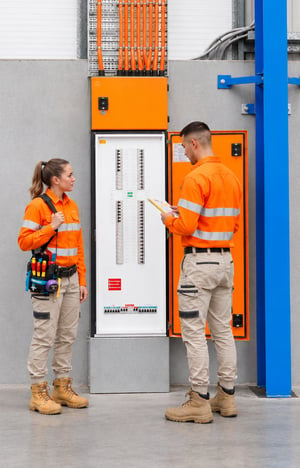
The starting point is a condition assessment of the existing switchboard by a licensed electrician. This goes beyond checking whether the board is working. It means identifying specific safety risks that affect the scope, timing and method of the upgrade.
Common findings in older commercial switchboards include asbestos-containing backing boards in installations predating the late 1980s, rewireable ceramic fuses that AS/NZS 3000 prohibits from reuse, inadequate fault current ratings where supply upgrades have increased fault levels beyond the board's rated capacity, and signs of thermal damage such as scorching, melted insulation or discoloured terminals.
Each of these findings changes the project. Asbestos-backed panels require licensed removal before any electrical work can begin, adding time, cost and specialist coordination. Inadequate fault ratings may mean the existing board cannot be used as a temporary supply during staged works. Thermal damage indicates active degradation that may limit how long the existing board can safely remain in service.
The safety assessment also determines whether the board's current location meets accessibility requirements. AS/NZS 3000 requires main switchboards to be safely and readily accessible for emergency isolation and maintenance. If the board sits in a cramped void, a storage area or a location with insufficient clearance, relocation becomes part of the upgrade scope rather than a future exercise.
Document these findings with photographs, test results and condition ratings. They become the baseline against which you measure the upgrade's success and the evidence you need for compliance records.
What capacity and load questions should you resolve before design begins?
Capacity planning is where many switchboard upgrades either deliver long-term value or become a short-term fix. The goal is to ensure the new switchboard accommodates both current demand and foreseeable future loads without oversizing the installation unnecessarily.
Start with a current load analysis. Identify every connected load, measure actual demand (not just nameplate ratings) and compare this against the existing switchboard's main breaker rating and busbar capacity. If actual demand approaches or exceeds the rated capacity, you have confirmation that the upgrade is load-driven, which affects design choices including whether the incoming supply itself needs upgrading.
Then assess future demand. Commercial buildings are adding new electrical loads at a rate that many switchboards installed even 10 years ago were not designed to support. EV chargers, additional air conditioning, commercial kitchen equipment, solar arrays, battery storage, data centre expansions and tenant fit-outs all add demand. On Platinum Electricians' EV charging infrastructure projects, for example, we routinely find that the switchboard assessment is the first step, because existing boards may not have been designed with those loads in mind.
A practical capacity assessment answers several questions: Does the switchboard have spare ways for additional circuits, or is it full? Can the busbars handle the prospective fault current from the network supply? If supplementary supplies such as solar or batteries are being connected, has the effect on busbar current ratings and temperature rise been verified? (This is a compliance requirement under AS/NZS 3000 and AS/NZS 4777.1 that is often missed.)
Where supply upgrades are needed, such as moving from single-phase to three-phase, the switchboard design needs to integrate a compliant Service Protection Device (SPD) as required under NSW Service and Installation Rules. Confirming supply arrangements with your distribution network service provider before finalising the switchboard design prevents costly redesigns.
How should communications and data infrastructure factor into the upgrade plan?
Switchboard upgrades in commercial buildings do not happen in isolation from the building's communications and data infrastructure. Structured cabling, network equipment, access control systems, CCTV, fire detection panels and building management systems (BMS) all rely on electrical supply and may share containment pathways with power cabling.
Before the upgrade begins, map the interdependencies. Identify which communications systems draw power from the switchboard being replaced, which containment routes (cable trays, conduits, risers) are shared between power and data cabling, and which systems will be affected by a power shutdown.
The practical impact is significant. If your access control system, CCTV, alarm monitoring or BMS loses power during a switchboard changeover without a planned workaround, you face a security gap, a compliance gap or both. Healthcare and aged care facilities face particular risk here, as nurse call systems, patient monitoring equipment and medication storage systems may all be connected to circuits that need isolation during the upgrade.
Coordination with your communications and IT team early in the planning process allows for temporary supply arrangements, UPS provisions or scheduled failovers that maintain critical systems during the changeover. This is also the point to assess whether the upgrade creates an opportunity to improve the separation between power and data infrastructure, which can reduce electromagnetic interference issues and simplify future maintenance.
What does a practical business continuity plan look like for a switchboard upgrade?
A switchboard upgrade requires a power shutdown. The question is whether that shutdown is planned, staged and communicated or whether it catches tenants, staff and critical systems off guard.
The business continuity plan for a switchboard upgrade should cover four areas: duration, timing, temporary supply and stakeholder communication.
Duration depends on the complexity of the upgrade, the condition of the existing installation and whether the supply authority needs to isolate the incoming service. A straightforward board replacement in a single-tenancy commercial premises may require a shutdown measured in hours. A multi-tenancy building with separate tenancy boards, shared common areas and a complex metering arrangement may need staged shutdowns over several days.
Timing should align with the building's operational profile. Retail sites may require after-hours or overnight work to avoid trading disruptions. Healthcare facilities need to coordinate around patient care schedules and ensure backup systems are tested before the primary supply is isolated. Government and education facilities often schedule major electrical work during holiday periods.
Temporary supply arrangements determine whether the business continues to operate during the shutdown. Generators, temporary distribution boards and staged switching sequences can maintain power to critical systems while sections of the switchboard are replaced. The cost and complexity of temporary supply is directly proportional to how many critical loads the building has, which is why the earlier capacity and communications assessments are so important.
Stakeholder communication is the element most often underestimated. Tenants, building management, security providers, alarm monitoring companies, IT support teams and the distribution network service provider all need to know what is happening, when, and what it means for their systems. Platinum Electricians prepares Emergency Management Plans, Waste Management Plans and detailed methodology documents for switchboard upgrade projects. These documents detail the construction methods, major plant and equipment, hours of work, environmental considerations and site access, giving every stakeholder a clear picture of the project.
What compliance documentation should you have in place before and after the upgrade?
Compliance documentation is not a formality to be handled at the end of the project. It should be part of the readiness assessment from the outset, informing design decisions and establishing the baseline against which the completed work will be verified.
Before the upgrade, gather the existing switchboard schedule, any previous test results, certificates of compliance for prior electrical work, site drawings showing the electrical layout, and records of any previous modifications or additions. If these documents do not exist, which is common in older buildings, the pre-upgrade assessment becomes the opportunity to create them. That baseline documentation has value beyond the immediate project: it supports future maintenance planning, insurance requirements and property transactions.
After the upgrade, you should receive a certificate of compliance for the work completed, updated switchboard schedules reflecting the new installation, test results for circuit protection, insulation resistance, earth fault loop impedance and RCD operation, and updated site drawings. For ISO-certified contractors, these deliverables are part of a documented quality management process. Platinum Electricians operates under ISO 9001 (Quality), ISO 45001 (Safety) and ISO 14001 (Environmental) certified management systems, which means documentation, testing and certification follow a structured process rather than relying on individual technician practices.
Retain these records as part of your site documentation. They are the evidence you need when engaging future contractors, responding to insurance queries, managing compliance audits or planning the next round of upgrades.
How do you choose the right contractor for a commercial switchboard upgrade?
The contractor question is inseparable from the readiness assessment. A contractor's qualifications, methodology and project management capability directly affect whether the upgrade is delivered safely, on time and with minimal disruption to your operations.
Start with non-negotiable qualifications. Valid electrical licences in all jurisdictions where you operate, appropriate insurance coverage (public liability and professional indemnity), and demonstrated compliance credentials. ISO Triple Certification (ISO 9001, ISO 45001, ISO 14001) indicates that the contractor manages quality, safety and environmental obligations through audited systems rather than ad hoc practices. Master Electricians accreditation signals commitment to industry standards and ongoing professional development.
Then assess project-specific capability. A commercial switchboard upgrade in a healthcare facility is a different undertaking from one in a retail tenancy. Ask for evidence of comparable projects: similar building types, similar complexity, similar operational constraints. Platinum Electricians has completed switchboard upgrade projects across council buildings, retirement villages, leisure centres, healthcare facilities and multi-tenancy commercial properties, with project timelines, scope documentation and client references available for each.
Assess how the contractor manages business continuity during the upgrade. Do they provide temporary power? Do they prepare detailed methodology documents before work starts? Do they assign a dedicated project manager or account manager who understands your building and your operational constraints? These are the details that separate a well-managed upgrade from one that creates more problems than it solves.
The commercial switchboard is the control point for your building's electrical system. The readiness assessment is how you make sure the upgrade to that control point is planned with the same level of care and specificity that the building's operations deserve. If you are considering a switchboard upgrade or want to assess whether your current installation meets your building's needs, Platinum Electricians can conduct a site assessment and provide a clear, documented recommendation. With local teams across Australia, 24/7 emergency support and a 25-year track record in commercial electrical projects, we are here when your building needs us.
Readiness Is What Makes an Upgrade Run Smoothly
A commercial switchboard upgrade is only as smooth as the planning behind it. Confirming the existing board’s safety status, resolving capacity and load questions, mapping communications dependencies, planning for business continuity and gathering compliance documentation before procurement means these factors shape the project rather than disrupt it. The result is an upgrade delivered on schedule, with minimal operational impact and the records needed to support future maintenance, audits and expansion.
If you’re planning a switchboard upgrade or want to know whether your current installation meets your building’s needs, Platinum Electricians can conduct a site assessment and provide a clear, documented recommendation. With local teams across Australia, 24/7 emergency support and a 25-year track record in commercial electrical projects, we’re here when your building needs us.

Commercial Switchboard Upgrade Readiness
A readiness assessment confirms that your site, team and contractor agree on the conditions, constraints and outcomes of a switchboard upgrade before work begins. It identifies the compliance requirements that apply under AS/NZS 3000 and AS/NZS 61439 early, so those requirements shape the project plan instead of causing surprises during construction.
Common findings include asbestos-containing backing boards in installations from before the late 1980s, rewireable ceramic fuses, fault current ratings that are too low for the current supply, and thermal damage such as scorching or discoloured terminals. Each one can change the scope, timing and method of the upgrade. Asbestos, for example, must be removed by a licensed specialist before any electrical work starts.
Start by measuring the actual demand of every connected load, rather than relying on nameplate ratings. Compare that demand with the main breaker and busbar ratings. Then allow for planned additions such as EV chargers, air conditioning, solar, battery storage or tenant fit-outs. If you are connecting solar or batteries, AS/NZS 4777.1 also requires their effect on busbar ratings and temperature rise to be verified.
It can. Access control, CCTV, fire detection panels, alarm monitoring and building management systems may all lose power during a changeover. Healthcare and aged care sites must also protect nurse call, patient monitoring and medication storage systems. Involve your IT and communications team early so you can arrange temporary supply, UPS provisions or scheduled failovers.
It depends on how complex the work is. A straightforward board replacement in a single-tenancy premises may need a shutdown measured in hours. A multi-tenancy building with separate tenancy boards and complex metering may need staged shutdowns over several days. Generators, temporary distribution boards and staged switching can keep critical systems running in the meantime.
You should receive:
-
A certificate of compliance for the completed work
-
Updated switchboard schedules
-
Test results for circuit protection, insulation resistance, earth fault loop impedance and RCD operation
-
Updated site drawings
Keep these records for future maintenance, insurance queries and compliance audits.
Look for:
-
Valid electrical licences in every jurisdiction where you operate
-
Appropriate insurance
-
Audited ISO 9001, ISO 45001 and ISO 14001 management systems
-
Evidence of comparable projects
-
Detailed methodology documents and temporary power capability
Platinum Electricians has delivered switchboard upgrades across council, healthcare, aged care, leisure and multi-tenancy commercial sites. We can conduct a site assessment and provide a clear, documented recommendation.

Australia’s most TRUSTED electrical contracts and projects PARTNER. We provide a peace of mind partnership through compliance, delivered with INTEGRITY and CARE.