

Test and tag compliance is one of the most frequently asked-about obligations for Australian businesses managing portable electrical equipment. The rules are not identical across every state, territory, or workplace type, and the testing intervals depend on the risk profile of your environment. This article explains what is required, who is responsible, and how your business can stay audit-ready at all times.
Platinum Electricians delivers compliant commercial test and tag services across Australia, backed by ISO Triple Certification (ISO 9001, ISO 45001, ISO 14001) and Master Electricians accreditation. Below, you will find a clear breakdown of test and tag compliance requirements for Australian workplaces.
What Is Required for Test and Tag Compliance?
- Australian WHS regulations require routine inspection and testing of portable electrical equipment in higher-risk workplaces.
- AS/NZS 3760 is the national standard that defines testing methods, intervals, and recordkeeping for test and tag.
- Testing frequency depends on a risk-based assessment of your workplace environment and equipment type.
- Platinum Electricians delivers audit-ready test and tag documentation with detailed digital reporting for multi-site portfolios.
- A competent person, typically a licensed electrician or trained tester, must carry out all inspections.

What Is Test and Tag for Portable Electrical Equipment?
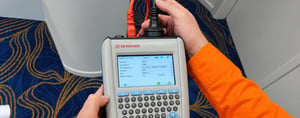
Test and tag is a two-step safety process applied to portable electrical equipment in workplaces across Australia. A competent person visually inspects each item for signs of damage, then carries out electrical testing with a calibrated Portable Appliance Tester (PAT).
Once the item passes, a durable tag is attached recording the test date, tester identity, and next scheduled test. Items that fail are removed from service immediately. This process confirms that the equipment is safe to use and that your business has a documented record of each inspection.
Is Test and Tag a Legal Requirement in Australia?
No single federal law mandates test and tag by name. Instead, the obligation comes from the model Work Health and Safety (WHS) Regulations adopted by most states and territories. Regulation 150 of the model WHS Regulations requires a Person Conducting a Business or Undertaking (PCBU) to ensure that electrical equipment used in a higher-risk environment is regularly inspected and tested by a competent person.
According to Safe Work Australia's Model Code of Practice for managing electrical risks, equipment powered through a socket outlet and used in conditions that expose it to damage, moisture, heat, or vibration must be tested at intervals determined by a risk assessment.
If your workplace qualifies as a higher-risk environment, testing is not optional. Failing to comply can result in enforcement action from your state or territory safety regulator and, more critically, puts workers at risk of electric shock, burns, or fire.
How Does AS/NZS 3760 Define Test and Tag Intervals?
AS/NZS 3760 is the Australian and New Zealand standard that sets out the methods, procedures, and recommended intervals for in-service safety inspection and testing of electrical equipment. The current edition (AS/NZS 3760:2022) introduced a more flexible, risk-based framework compared to earlier versions.
Under this standard, testing intervals are not a single fixed schedule. They depend on workplace classification: construction and demolition sites, factories and warehouses, commercial kitchens, offices, healthcare facilities, and other environments each carry different risk ratings.
For example, equipment on a construction site may require testing every three months, while equipment in a low-risk commercial office may only need testing every five years. Your compliance manager or statutory testing partner should assess each location individually.
Which Workplaces Are Classified as Higher Risk?
The WHS Regulations and AS/NZS 3760 both reference the concept of a higher-risk workplace. These environments are more likely to cause damage to portable electrical equipment, increasing the chance of electrical faults. Common examples include:
- Construction and demolition sites
- Factories, workshops, and warehouses
- Commercial kitchens and hospitality venues
- Outdoor or wet locations
- Mining and resource sites
- Facilities where corrosive substances are present
If your business operates across multiple site types, each location should be assessed on its own risk profile. This is particularly relevant for multi-site organisations managing facilities in different states or territories, where local regulatory requirements may also apply.
Who Can Legally Perform Test and Tag in Australia?
A competent person must perform all inspections and tests. In most states and territories, this means a licensed or registered electrician, a licensed electrical inspector, or a person who has completed accredited training in testing portable electrical equipment.
The model WHS laws do not prescribe a single national qualification. Your state or territory WHS regulator can confirm the specific training or licencing requirements that apply. In practice, engaging a qualified commercial electrician with the right accreditations gives you confidence that results are accurate and legally defensible.
What Records Do You Need to Maintain for Compliance?
Accurate recordkeeping is a core component of test and tag compliance. Your records should include the date of each inspection and test, the name or identifier of the competent person, the outcome (pass or fail), and the next scheduled test date. You should also maintain a register of all portable electrical equipment on each site.
These records serve two purposes. They demonstrate your compliance to a WHS regulator during an audit, and they give your maintenance team visibility over asset condition across your portfolio. Platinum Electricians delivers detailed digital reporting and asset registers on completion of all testing, making it straightforward to maintain audit-ready documentation across multiple locations.
How Platinum Electricians Supports Test and Tag Compliance
Platinum Electricians offers compliant commercial test and tag services that include equipment testing, tagging, defect identification, and detailed digital reporting. Our technicians use certified, calibrated equipment and follow AS/NZS 3760 testing procedures to keep your portable electrical equipment compliant.
For businesses managing large portfolios, our planned preventative maintenance approach means testing is scheduled proactively, deadlines are tracked, and results are reported electronically.
With local teams across seven Australian cities and 24/7 availability, Platinum Electricians makes statutory testing and compliance the easiest part of running your business.
Our ISO Triple Certification (ISO 9001, ISO 45001, ISO 14001) and Master Electricians accreditation confirm that every test and tag engagement meets the quality, safety, and environmental standards your business requires. We have managed more than 57,000 electrical assets and completed over 13,497 projects nationwide since 2001.

Staying Audit-Ready With Test and Tag
Test and tag compliance protects your workers, satisfies your regulatory obligations, and creates a clear paper trail for auditors. The requirements centre on a risk-based approach: identify your workplace classification, determine the correct testing intervals under AS/NZS 3760, engage a competent person, and maintain thorough records.
If you manage multiple sites or complex electrical asset portfolios, partnering with a credentialled electrical contractor removes the administrative burden and keeps your compliance on track. Platinum Electricians is ready to support your compliance needs across Australia. Feel free to call anytime on 1800 752 846.
Test and Tag Compliance in Australia
Test and tag is compulsory for businesses that operate in higher-risk environments as defined by the WHS Regulations. Lower-risk workplaces like standard offices may not require routine testing, though periodic inspections are still recommended.
Testing frequency is determined by the risk classification of your workplace and the type of equipment. AS/NZS 3760 sets intervals ranging from three months on construction sites to up to five years in low-risk offices.
AS/NZS 3760:2022 is the primary standard. It outlines inspection methods, testing procedures, and recommended intervals. Platinum Electricians follows this standard for all testing and tagging engagements, giving you confidence in audit-ready results.
Failed equipment must be removed from service immediately. Platinum Electricians identifies defects during each inspection and reports them through detailed digital documentation, so your team can arrange repair or replacement promptly.
Yes. Platinum Electricians supports multi-site test and tag programs with dedicated account management, structured scheduling, and electronic reporting. Our national coverage and local teams across seven cities make it straightforward to keep every location compliant.

Australia’s most TRUSTED electrical contracts and projects PARTNER. We provide a peace of mind partnership through compliance, delivered with INTEGRITY and CARE.